

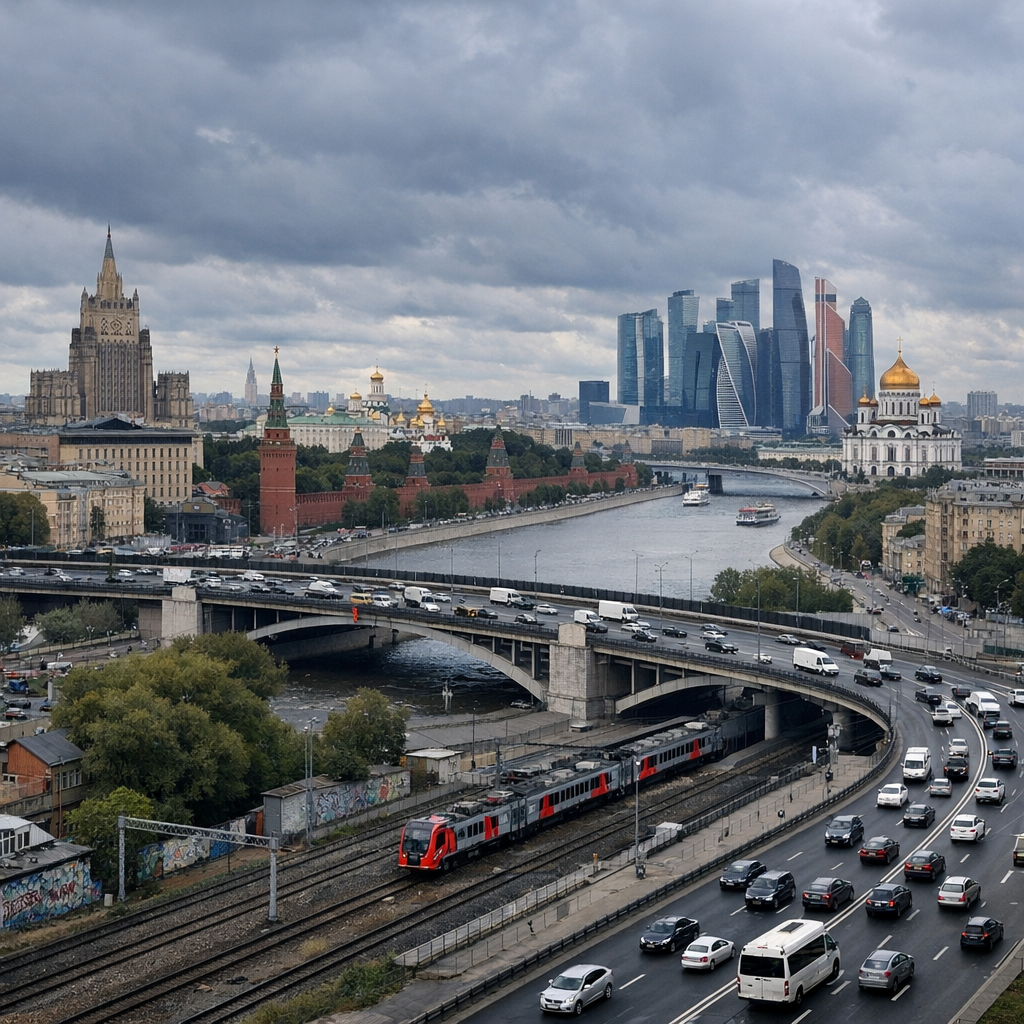
Moscow’s climate has undergone notable changes over the past few decades, with a discernible warming trend that has implications for the city’s environment and infrastructure.
Historical Temperature Trends
Studies indicate that from 1780 to 2024, the average air temperature in Moscow’s urban periphery increased at a rate of 0.012°C per year, while the city center experienced a slightly higher rate of 0.017°C per year. This difference is partially attributed to the urban heat island effect, where human activities and infrastructure contribute to localized warming. In rural areas of the Moscow Region, temperatures have risen by approximately 1.5°C to 2.0°C over the same period. The warming is more pronounced during the winter and spring months, leading to a gradual decrease in the annual temperature amplitude and the degree of continentality of Moscow’s climate.
Recent Climate Observations
In recent years, Moscow has experienced record-breaking temperatures. For instance, the last decade was the warmest in the history of meteorological observations in the city. The average January temperature, which was around -12.0°C in the early 1900s, has now risen to approximately -7.0°C.
Impacts on Urban Infrastructure
The increasing frequency of extreme weather events, such as heavy rainfall and heatwaves, poses challenges to Moscow’s infrastructure. Stormwater systems, designed for previous climatic conditions, often struggle to manage the intense downpours, leading to street flooding and transportation disruptions. To adapt, urban planners are considering the implementation of open drainage systems, wastewater collection tanks, and expanded green spaces to effectively absorb and regulate moisture.
Looking Ahead
As Moscow continues to experience these climatic shifts, it is crucial for the city to develop and implement strategies that address both mitigation and adaptation. Enhancing the resilience of urban infrastructure, revising building codes, and increasing green spaces are essential steps toward ensuring that Moscow remains a livable and sustainable city in the face of ongoing climate change.