

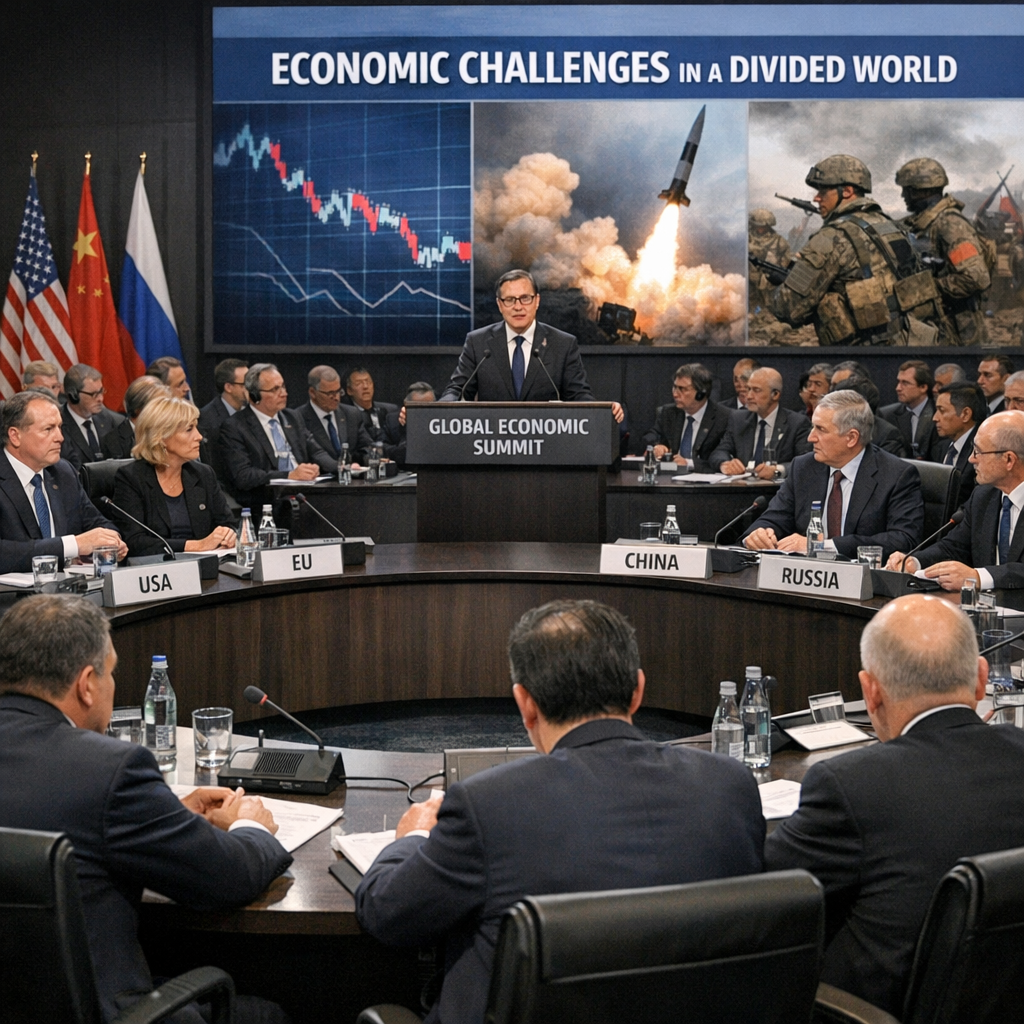
The global economic landscape is currently navigating a complex array of challenges, with geopolitical tensions and energy market disruptions at the forefront. Recent conflicts in the Middle East have introduced significant uncertainties, affecting growth projections and inflation rates across various regions.
Impact of Middle East Conflicts
The ongoing conflict in the Middle East has disrupted global economic momentum, leading to a downward revision of growth forecasts. The International Monetary Fund (IMF) has adjusted its global growth projection to 3.1% for 2026, a decrease from the previous estimate of 3.4%. This revision is largely attributed to the economic repercussions of the conflict, including disruptions in the oil market. The IMF’s forecast assumes a relatively brief conflict and stabilized oil prices; however, prolonged hostilities could further dampen global economic prospects.
Energy Market Disruptions
The Middle East conflict has also triggered an energy supply shock, resulting in elevated oil and gas prices. The Organization for Economic Cooperation and Development (OECD) notes that this energy shock is testing the resilience of the global economy. The OECD projects global growth at 2.9% in 2026, with inflation pressures persisting due to the surge in energy prices. These developments underscore the interconnectedness of geopolitical events and global economic stability.
Regional Economic Projections
Different regions are experiencing varied impacts from these global challenges. The United States is projected to grow at 2.0% in 2026, supported by resilient consumer spending and investments in artificial intelligence technologies. In contrast, the Eurozone faces a more subdued outlook, with growth projected at 0.8% in 2026, as rising energy prices and geopolitical uncertainties weigh on economic activity. Emerging markets and developing economies are particularly vulnerable, with growth expected to slow to 4.0% in 2026, reflecting the compounded effects of energy shocks and geopolitical tensions.
Inflationary Pressures
Inflation remains a pressing concern globally. The OECD projects headline inflation in G20 countries to be 4.0% in 2026, influenced by the surge in global energy prices. This persistent inflationary pressure poses challenges for monetary policymakers, who must balance the need to control inflation with supporting economic growth.
Conclusion
The current global economic environment is marked by significant uncertainties stemming from geopolitical conflicts and energy market disruptions. While some regions demonstrate resilience, the overall outlook suggests a period of moderated growth and heightened inflationary pressures. Policymakers and businesses must navigate these challenges with strategic foresight to foster economic stability and growth in the face of ongoing uncertainties.