

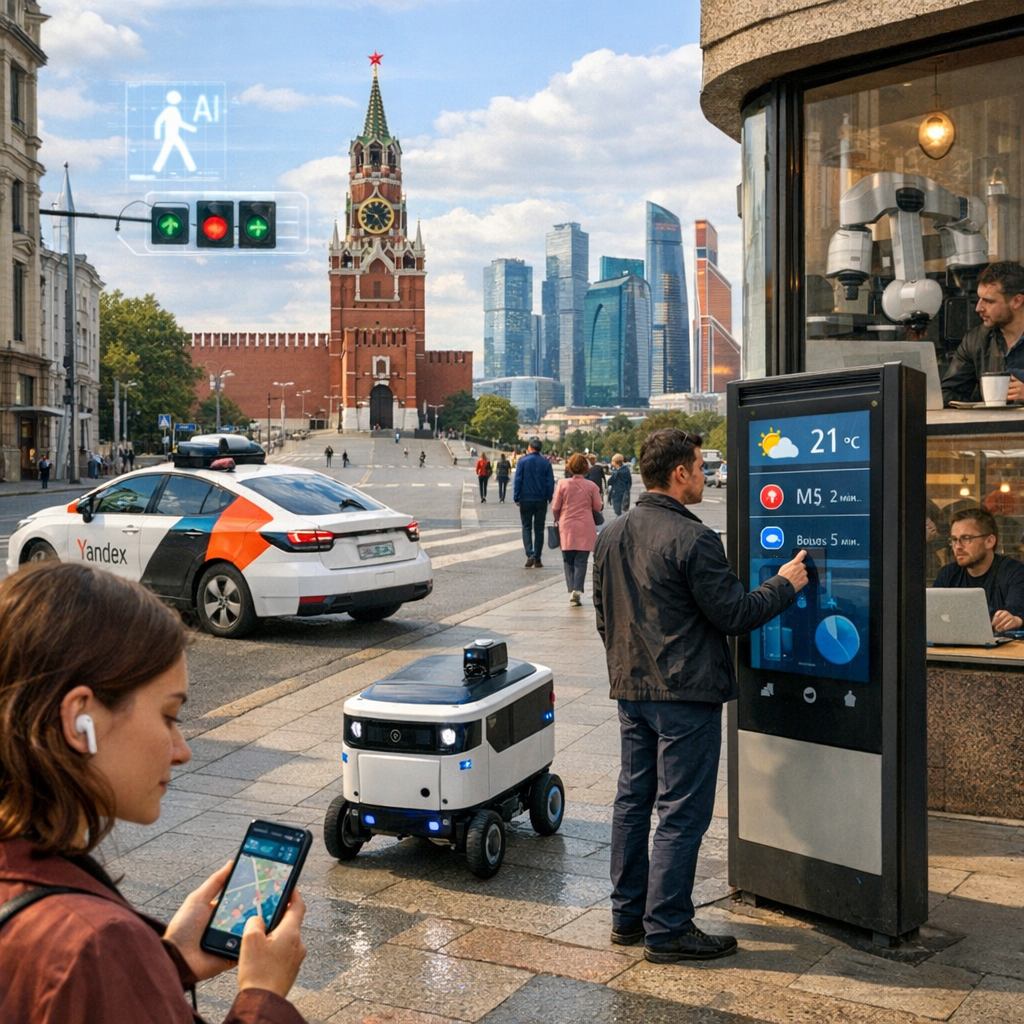
Artificial Intelligence (AI) has seamlessly integrated into the daily lives of Muscovites, revolutionizing how residents interact with technology and access services. A recent study by the Department of Information Technologies of Moscow revealed that in 2025, over 55% of surveyed residents utilized generative AI for personal, work, and educational purposes, indicating a significant shift towards AI-driven solutions in the city.
One prominent example is the adoption of Yandex’s virtual assistant, Alisa. In March 2026, Moscow residents gained the ability to report energy consumption through Yandex’s intelligent services. This can be done via text in the app or chat with the virtual assistant, and most conveniently by voice using a Yandex Station device. To use the service, residents need an active account on mos.ru. They then activate the Mosuslugi feature on the Yandex Station and link their Yandex ID and Mos ID accounts. No paid Yandex subscription is required. This integration exemplifies how AI is streamlining routine tasks and enhancing user convenience.
The city’s startup ecosystem is also thriving, with numerous AI-focused companies emerging. Notable among them is Cognitive Technologies, a pioneer in AI-based driver assistance systems. The company developed C-Pilot, an intelligent autonomous driving system that can be installed in cars and other vehicles. Additionally, Snuppy AI, founded in 2025 by graduates from the Moscow Institute of Physics and Technology, offers a platform that allows users to create hyper-realistic photos and videos using advanced AI algorithms. To generate a photo, users visit the website, upload 10-15 of their own photos to train the AI platform, and receive high-quality images, eliminating the need for traditional photography sessions.
Public perception of AI in Moscow is largely positive. A survey conducted by the Russian Public Opinion Research Center (VCIOM) indicates that 63% of Russians use AI technologies in their daily lives, with younger generations showing even higher engagement. Among Gen Z and younger millennials, the percentage of those using AI reaches 86-87%. The most popular ways of interacting with AI among Russians are voice assistants and text queries using chat GPT or neural networks (31% each). One out of five (21%) people has experience using a chatbot, almost the same percentage (19%) have used an object recognition system or photo search. This widespread adoption reflects a growing trust and reliance on AI-driven solutions.
Moreover, AI’s influence extends to urban management. The introduction of artificial intelligence surveillance systems has dramatically reduced the number of offenses in Moscow, Russian President Vladimir Putin said at a plenary session of the St. Petersburg International Economic Forum. This implementation underscores the role of AI in enhancing public safety and urban efficiency.
As AI continues to evolve, its integration into various facets of Moscow’s daily life and business landscape is expected to deepen, fostering innovation and improving the quality of life for its residents.