

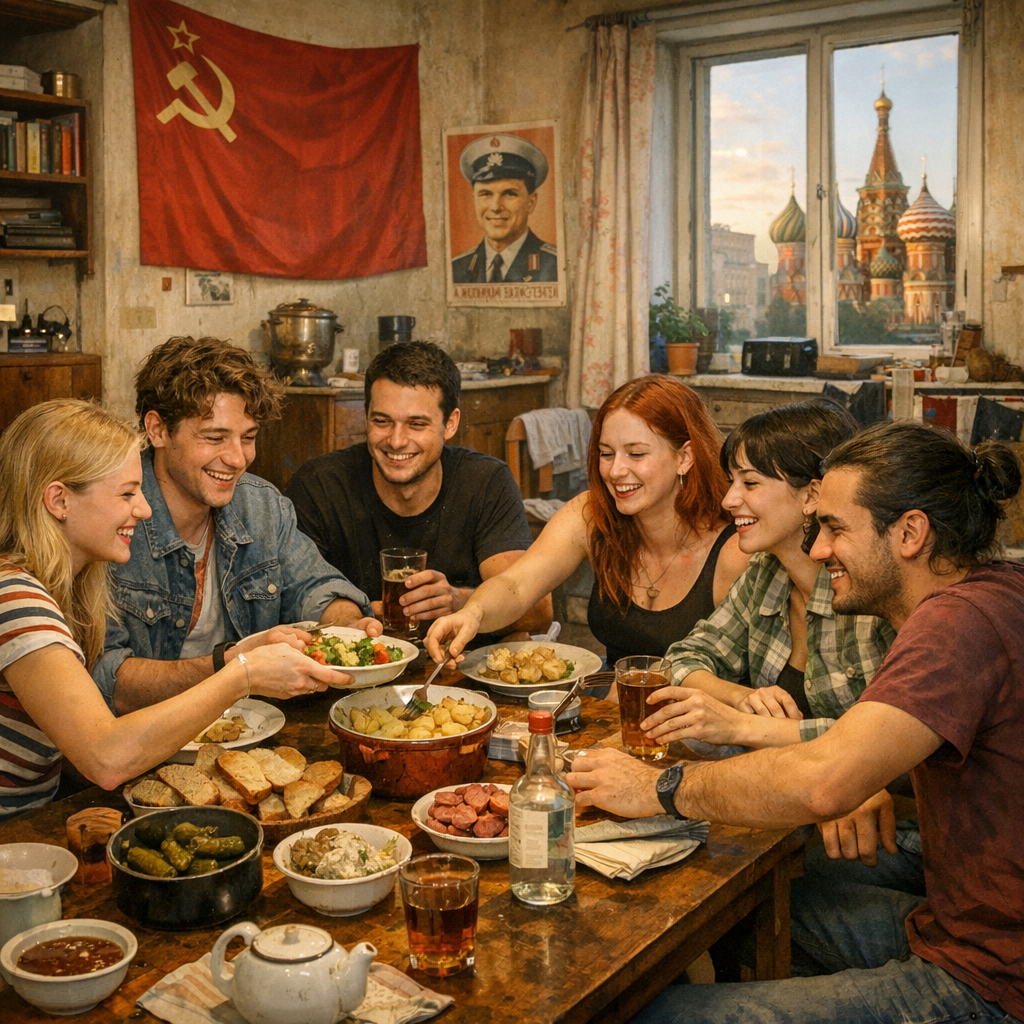
In Moscow today, a growing number of young people are choosing to live in communes with people they barely know. These aren’t sects or spiritual cults—simply shared housing arrangements with strangers. Some move in for economic reasons, others for inspiration or to fight loneliness. On paper: shared rent, shared tasks. In reality: something much deeper.
Why Moscow Communes Are Growing
One major driver is economic pressure. Moscow’s housing costs are high; many young professionals, artists, students find a flat to be individually unaffordable. Communes offer a way to lower monthly rent and utility burdens by dividing them among many residents.
But economics isn’t everything. Several residents say they stay because communes bring meaningful relationships. Artist collectives and creative types often find energy in communal spaces. An Ural-born painter, Aся, first visited a lecture in a commune and decided to stay—because she liked the conversations, the diversity of minds around, and a sense that life can be more than isolated routines. Relations are built in kitchens, on shared balconies, around joint chores.
The Challenges: Not All Homes Feel Equal
Living with strangers means learning to negotiate. Some communes are loosely organized: everyone handles their share. Others have rules written over time—quiet hours, shared cleaning rotations, common meals. Tolerance is tested: mismatched sleep cycles, different expectations on cleanliness, shared kitchens gone untidy.
There’s also emotional work. Some people seek community specifically to escape loneliness, but forming emotional bonds takes time. Disagreements over finances or personal habits can strain relationships when boundaries aren’t clear. The risk: communes can turn exhausting rather than rejuvenating.
What Makes a Commune Feel Like Home
- Clear communication: When rules and expectations are discussed openly early, conflicts reduce.
- Shared purpose: Communes where members share interests—arts, music, activism—often thrive because collaboration grows organically.
- Respect for privacy: Even in shared spaces, people need personal time. Communes that provide private corners or off-time tend to keep harmony.
- Flexibility: Economics or moods shift. A good commune adjusts—rotates chores, shifts roommate roles, handles turnover smoothly.
Thoughts for Anyone Considering Commune Living
If you’re thinking of trying a commune, start small—try subletting a room first, see how shared living feels. Ask questions about existing rules and financial expectations before moving in. Visit the home at different times to get a feel for the rhythms. And remember: the goal isn’t perfect harmony—it’s finding people who treat shared life as more than simply splitting costs.
In a city as vast as Moscow, communes are becoming quiet hubs of connection. They offer not just housing, but belonging. For many, the strangers under one roof become friends; sometimes, a makeshift family. And in these homes, people are building their own communities—one shared meal, one collective decision, one conversation at a time.